


Cali weed is not a strain. It is a collective name for the cannabis genetics of the American West Coast, with California at the centre — and for the growing standard those genetics set. When someone says a plant is "Cali", they are talking about a lineage, not a variety: OG Kush, Girl Scout Cookies, Gelato, Zkittlez and the hundreds of hybrids built from them.
That distinction matters, because the word gets used two different ways. In a seed catalogue it describes verifiable genetics with a known family tree. On the street market it is mostly a description of packaging. This guide covers the first meaning: where these genetics came from, which strains the name actually covers, and how four of them behave when you grow them yourself.
Where Cali Weed Came From
The strains that came out of California and the Pacific Northwest between the late 1990s and the early 2010s changed what growers and consumers expected from cannabis. Before that wave, the European and Dutch seed market set the standard. After it, everyone was chasing the same thing: dense, resinous, terpene-heavy hybrids with yields that justified the grow space. That shift is what the word refers to.
The reasons are straightforward. West Coast breeders had access to exceptional OG Kush phenotypes, classic Kush and Afghan landrace genetics, and — critically — a competitive indoor market that rewarded quality above everything else. Medical dispensaries and, later, regulated adult-use retail created a feedback loop. Strains that didn't perform in yield, potency or appearance got dropped fast. The ones that survived, and got shared, cloned and crossed repeatedly, earned their status through results rather than marketing.
Those survivors didn't just sell well; they became reference points. When a new release today is described as "Gelato-leaning" or "Gorilla-level resin", growers immediately know what is meant. That is what a genetic standard looks like, and it is why Cali weed seeds are now a category in their own right rather than a novelty.
A large share of what is sold under Californian branding in Europe never came near California. A BBC investigation into the UK market found that flower marketed as "Cali" is frequently grown elsewhere and rebranded in printed bags that cost a few pounds. The name on the bag proves nothing.
Genetics are the part that can be verified. A seed with a documented lineage tells you exactly what you are growing — which is the honest version of the same promise.
Which Strains Are Called Cali?
The term itself is European rather than American. Growers in California don't describe their own plants as "Cali" — they name the strain. The shorthand appeared in the UK and mainland Europe around the middle of the 2010s, as West Coast genetics and West Coast growing standards started arriving at the same time, and it stuck because it was useful. But that also means the boundaries are loose, which is why people end up searching whether one specific variety counts.
Lists of the best Cali strains tend to name the same handful, and it is a fair canon: OG Kush and its phenotypes, Girl Scout Cookies, Gelato, Sunset Sherbet, Zkittlez, Runtz, Blue Dream, Do-Si-Dos and Purple Urkle. Two of those we simply don't carry: there is no Blue Dream and no pure Runtz in our catalogue, and we would rather name them plainly than pretend the list stops where our stock does. The Cookies side of the family we do work with — Cookies USA descends directly from it — and the Zkittlez line reaches us through Watermelon Zkittlez.
The OG Kush branch deserves its own mention, because it is the root of most of the rest. Super OG Kush and Lemon Larry OG both sit on that line, the second through the Larry OG cut that came out of Orange County. Without OG Kush there is no GSC, and without GSC there is no Gelato — the whole dessert era traces back through it.

Geography is the part that usually gets lost. Several of these varieties are named after the specific places they came from: Mendocino Purple Kush and Purple Urkle both belong to Mendocino County in the Emerald Triangle, Tahoe Cure carries the Tahoe OG line from the lake on the Nevada border, and Gelato and Sunset Sherbet are Bay Area genetics. That is California by origin, not by sticker. The same dessert tradition continues in newer crosses such as Ice Cream and Black Cherry Punch, which lean on the same sweet, resin-heavy profile.
The rest of this guide narrows to four of them. The criterion is simple: we cover in detail the strains we breed ourselves and can give verified figures on, rather than retelling what others have written.
The Four Strains in the Power Mix American Set
These four sit together in one pack, which makes them a convenient way to see the range in a single run. Each comes from a different corner of the story, and each behaves differently in the tent.
| Strain | Genetics | THC | Flowering (LED) |
|---|---|---|---|
| Gorila | Chem Sis × Sour Dubb | 25–27% | 49–56 days |
| Gelato | Sunset Sherbet × Thin Mint GSC | 25–27% | 53–58 days |
| Romulan | Pure Romulan | 24% | 43–53 days |
| Cookies USA | Durban Poison × OG Kush | 25–28% | 49–56 days |
Gorila
Gorila is the Pyramid Seeds take on the Gorilla Glue lineage — a line built on Chem's Sister and Sour Dubb that became one of the most awarded strains of the 2010s. What made it so widely sought after was the combination of extreme resin production with broad grower appeal. This is not a fussy plant. It handles moderate stress well, responds cleanly to topping and LST, and produces chunky, dense colas coated in trichomes to the point of absurdity.
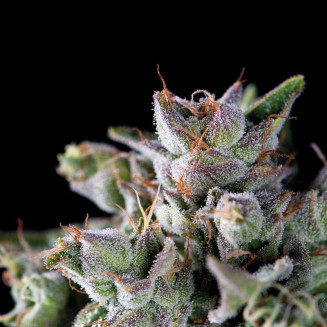
At 55% indica and 25–27% THC, it sits in the middle of the pack for structure but at the top for resin. That resin load also makes it the obvious choice here if you plan on rosin pressing or bubble hash extraction, where yield depends far more on trichome density than on flower weight. Expect harvests on the higher end for an indica-dominant plant — this one fills a SCROG properly. Full specification on the Gorila seeds page.
Buy GorilaGelato
Gelato came out of the Bay Area as a cross between Sunset Sherbet and Thin Mint GSC, and it is probably the single strain most responsible for the modern dessert-flavour era. The plants are compact to medium height, tend toward purple and violet hues under cooler night temperatures, and produce flowers with a terpene profile that is genuinely distinct — sweet, creamy and dense, with citrus underneath.
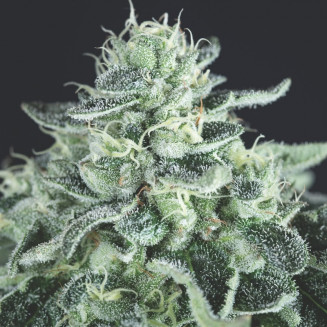
The split is 55% indica to 45% sativa, with 25–27% THC and the longest flowering window of the four at 53–58 days under LED. Yields are solid rather than spectacular, but consistency is high: this is a strain that rarely disappoints between phenotypes. We covered the Gelato lineage, terpene profile and its Runtz-based hybrids in a dedicated guide, and the grow data sits on the Gelato seeds page.
Buy GelatoRomulan
Romulan is the only one of these four that nobody calls Cali, and it is here precisely for that reason. It comes from Vancouver Island, out of the Canadian medical scene rather than the California hype cycle — the same west coast, a different country and an older school of breeding. At 75% indica and around 24% THC, it gives you a genuinely different harvest instead of a fourth variation on the dessert theme.
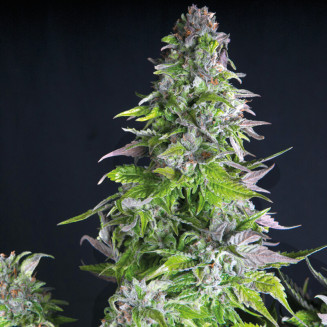
What it brings is old-fashioned heavy indica in the best sense: deep pine and spice on the nose, violet-red colouring in the buds, and a body-first effect. It is also the fastest plant in this group, finishing in 43–53 days under LED, and the shortest. Details on the Romulan seeds page.
Buy RomulanCookies USA
Cookies USA traces back to the Girl Scout Cookies family — Durban Poison crossed with OG Kush — which took off in California dispensaries and never really stopped. At 70% indica and 25–28% THC, it is the most potent of the four on paper. The plants have a recognisable structure: medium height, dense internodal spacing, and flowers that often show purple and dark green colouring in the final two weeks.
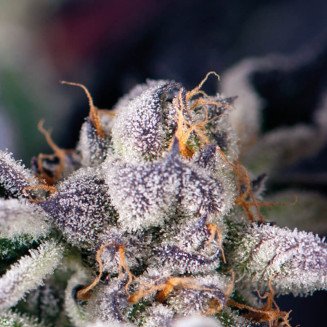
The full Cookies family tree and the GSC origin story explains why so much of the modern American catalogue traces back to this one line — including, indirectly, Gelato. Specifications are on the Cookies USA seeds page.
Buy Cookies USATerpenes: What the Flavour Actually Comes From
Running all four gives you a wide terpene spread at harvest. Gelato brings creamy, citrus-forward notes — myrcene and limonene dominant, with caryophyllene adding spice underneath. Gorila skews toward earthy pine and diesel, driven by caryophyllene, myrcene and pinene. Romulan lands in deep forest and spice territory, a classic indica expression with myrcene and terpinolene prominent. Cookies USA sits between them all: earthy sweetness, hints of vanilla, and the slightly minty-fuel note the GSC family is known for.
That spread is the real argument for growing several strains rather than four plants of one. Potency across this group sits within a few points of each other, but the interaction between terpenes and cannabinoids is what makes each harvest feel different. It is also why the "which is strongest" question is less useful than it sounds — two plants testing at 26% THC with different terpene profiles produce noticeably different results, and most experienced growers pick by aroma long before they pick by percentage.
Terpene retention is also where a lot of home grows lose quality. These compounds are volatile: high temperatures during late flower, aggressive drying and over-handling of the buds all strip them. Dry slowly at 18–20 °C with humidity around 60%, and the difference between these four strains will still be obvious in the jar three months later. Rush the dry at 25 °C and everything ends up smelling roughly the same, which defeats the point of growing a mix.
How to Grow All Four in One Space
Running four strains in one tent takes planning. The three variables to manage are height, finish time and feeding weight — get those right and a mixed run is no harder than a single-strain one.
Canopy and training
Gorila and Gelato both respond well to topping at the fourth or fifth node during veg, which brings canopy height into line and boosts lateral branching. Romulan stays naturally short, so it may need a slight elevation — a small platform or a taller pot — to sit level in a SCROG. Cookies USA grows slightly taller and will stretch in early flower, so account for that before you flip the light cycle.
Flowering times
Finish times are close but not identical. Under LED, Romulan comes in first at 43–53 days, Gorila and Cookies USA follow at 49–56 days, and Gelato takes the longest at 53–58 days. That is a spread of roughly two weeks across the tent. Running them together is entirely practical; simply check trichomes strain by strain rather than pulling everything on one date.
Feeding
Gorila and Cookies USA tolerate heavier nutrient loads through mid and late flower. Gelato sits in the middle — feed moderately and watch the leaves for early signs of excess. Romulan is the most conservative feeder of the four, and since it also finishes first, ease off in its final two weeks or you will see tip burn before the finish line.
Pot size and spacing
Four strains in one tent means four root systems developing at slightly different speeds. Keep pot sizes identical — 11 to 18 litres suits all four — so watering stays predictable and you are not guessing which plant dried out first. Romulan, being the most compact, will use less water than the other three; check by weight rather than on a fixed schedule, lifting each pot instead of watering the whole tent at once.
On spacing, give each plant enough room that the canopies touch but don't overlap. Gorila and Cookies USA both branch widely once topped, and if they crowd Gelato the lower sites will stay underdeveloped. Four plants in a 120 × 120 cm tent is comfortable; six is where airflow starts to suffer in exactly the way these dense-budded strains punish.
Light and humidity
A 600W HPS or a quality full-spectrum LED board will get the best out of all four. Manage VPD through the cycle and keep relative humidity below 50% once you pass week five of flower. Bud density across this group — particularly on Gorila and Romulan — makes botrytis a real risk if humidity climbs in the final weeks.
Label each plant at the start of veg, not at harvest. With four similar-looking indica-dominant plants in one tent, the tags are the only thing standing between you and four unlabelled jars of "something American".
A Ready-Made Set: Power Mix American
If you want all four in one go, the Power Mix American pack holds twelve feminized seeds — three each of Gorila, Gelato, Romulan and Cookies USA — for €60. That is enough of each to run a proper comparison and keep a couple in reserve, and it works out cheaper than buying the four separately. The rest of the Cali weed seeds range, including the OG Kush line, the Mendocino purples and autoflowering versions of several of these strains, sits in the American Strains category.

Frequently asked questions
What is Cali weed?
Cali weed is a collective name for cannabis genetics that originated in California and the wider American West Coast, not a single strain. It covers lines such as Gelato, Gorilla Glue, Cookies and their hybrids, along with the dense, resin-heavy growing standard those genetics set.
What are Cali strains?
Cali strains are cannabis varieties that originated on the American West Coast, mainly in California, and the hybrids bred from them. The label describes where the genetics come from rather than a botanical category, so a Cali strain can be indica-dominant, sativa-dominant or balanced.
What are the best Cali strains?
The names that appear on almost every list are OG Kush, Girl Scout Cookies, Gelato, Sunset Sherbet, Zkittlez, Runtz, Blue Dream, Do-Si-Dos and Purple Urkle. Which is best depends on what you grow for: Gelato and Sunset Sherbet for dessert terpenes, the OG Kush line for classic fuel and pine, Purple Urkle and the Mendocino genetics for colour and heavy body effect.
Is Cali weed indica or sativa?
Most Cali genetics are indica-dominant hybrids rather than pure indicas or sativas. Gelato sits at 55% indica, Cookies USA at 70% and Romulan at 75%, so the category leans toward body-focused effects with hybrid structure.
Why is Cali weed stronger?
It usually isn't stronger by nature — it is selected harder. West Coast breeders worked in a market where weak plants were dropped immediately, so the lines that survived combine high THC with dense trichome coverage. Most of these strains test between 24% and 28% THC.
Is Cali weed from California?
The genetics are; a large share of the flower sold under that name in Europe is not. A BBC investigation into the UK market found cannabis marketed as "Cali" is often grown elsewhere and sold in Californian-style packaging, which is why growing from documented seed is the only reliable way to know what you have.
Is Cali weed the strongest?
No. Cali strains sit at the top end of the range, typically 24–28% THC, but they are not categorically the strongest cannabis available. Claims of 33–35% THC that circulate in retail listings are rarely backed by lab results, and terpene profile affects the experience as much as the THC number does.
How to grow Cali weed?
Grow it as you would any indica-dominant hybrid: top at the fourth or fifth node, keep relative humidity below 50% from week five of flower, and plan for 43–58 days of flowering depending on the strain. Dense buds make airflow and humidity control the two things most worth getting right.
What does Cali weed look like?
Dense, compact buds with heavy trichome coverage and deep colouring — often purple or violet where night temperatures drop. Appearance alone proves nothing about origin, since the look comes from the genetics and the cure rather than the location.
Read also


Strains from this article



Comments
No comments yet. Be the first.