


Fast version seeds are one of the most misunderstood categories in the cannabis seed market. The name sounds like it might mean autoflowering. It doesn't. Fast version seeds are feminized photoperiod plants — they still need a change in light schedule to flower, just like any standard feminised seed. What changes is how long the flowering stage takes. This guide explains exactly what fast version means, how these strains are bred, and when it makes sense to choose them over autoflowering or standard feminized seeds.
For a broader look at how fast version fits alongside the other seed types, see our complete guide to cannabis seed types.
What "Fast Version" Means
The name refers to flowering speed — nothing else.
A fast version seed is a feminized photoperiod strain that has been bred to complete its flowering stage more quickly than the original version of that strain. Where a standard feminized variety might take 9–10 weeks to flower, the fast version of the same genetics might finish in 6–7 weeks.
The plant itself behaves exactly like any other feminized photoperiod strain: it grows vegetatively under long days or a long light schedule, then switches into flowering when days shorten or when the indoor light cycle is reduced from 18 to 12 hours. The only difference is that once flowering begins, it wraps up earlier.

That distinction — photoperiod-triggered flowering, shorter flowering window — is the entire definition of "fast version."
Fast-Flowering Is Photoperiod — Not Autoflowering
This is the single most important thing to understand about fast version seeds.
The confusion is understandable: both fast version seeds and autoflowering seeds are associated with speed, and both finish sooner than a standard feminized photoperiod plant. But the mechanism is completely different.
Autoflowering seeds flower based on age. They do not care how many hours of light they receive — after a set number of weeks from germination, they flower automatically, regardless of light schedule. You can run them under 20 hours of light from seed to harvest and they will still flower on schedule.
Fast version seeds flower based on light. They need the same trigger as any photoperiod plant — a reduction in daily light hours indoors, or the natural shortening of days outdoors. Without that trigger, a fast version plant will keep growing vegetatively indefinitely, just like a standard feminized seed would.
In practice: if you plant a fast version seed outdoors in May and expect it to start flowering in July because it's "fast," you will be waiting a long time. It will flower when days shorten in late summer, exactly as a standard feminised plant would — it will just finish its flowering stage a few weeks ahead of schedule once that trigger arrives.
How Fast Strains Are Bred
The genetics behind the shorter flowering window.
Fast version strains are created by crossing a standard feminized photoperiod strain with an autoflowering variety, then selectively backcrossing the offspring over multiple generations. The goal is to isolate the early-finish trait from the autoflowering parent while breeding out the automatic-flowering gene itself.
Done correctly, the result is a plant that looks, grows, and behaves like a feminized photoperiod strain in every way — except that its internal flowering clock runs faster. The autoflowering genetics have been used as a tool to introduce a single trait (shorter flower time), not as a feature of the finished plant.
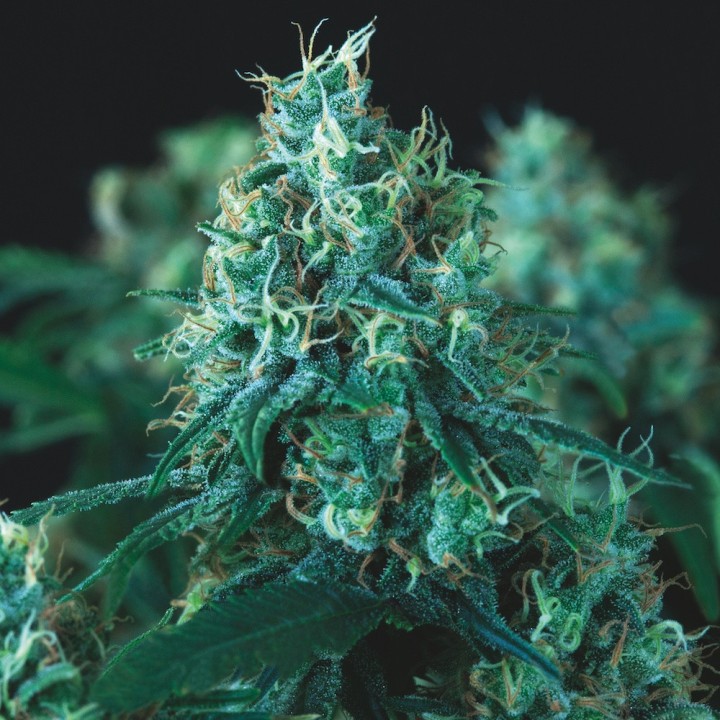
This is why fast version seeds can legitimately be marketed as feminized photoperiod seeds. They are — the auto genetics are a breeding instrument, not a characteristic of the variety you are growing.
Fast Version vs Autoflowering: Key Differences
Side by side, so the distinction is clear.
| Fast Version Seeds | Autoflowering Seeds | |
|---|---|---|
| Flowering trigger | Light schedule (photoperiod) | Age — automatic, no light change needed |
| Vegetative stage | Controlled by grower — can be extended | Fixed — cannot be extended |
| Plant size | Full photoperiod size potential | Typically smaller and more compact |
| Yield ceiling | Higher — comparable to standard feminized | Lower — limited by compact size and fixed schedule |
| Flowering time | 43–53 days under LED in our range (48–58 days indoors), 2–3 weeks faster than standard fem | Typically 5–7 weeks of flowering |
| Total seed-to-harvest | Shorter than standard fem, longer than auto | Fastest overall — 10–13 weeks from seed |
| Recovery from stress | Can extend veg to recover | Limited — clock keeps running |
For a deeper look at how autoflowering seeds work, see our dedicated guide: Autoflowering Seeds Explained.
When to Choose Fast Version Seeds
Three situations where the speed advantage actually matters.
- Outdoor growing in a short-season climate. If your warm window closes early — cold autumns, early frosts, unpredictable late-summer rain — fast version seeds let you get the most out of a photoperiod plant without risking the harvest to the weather. You keep the size and yield ceiling of a feminized strain while finishing 2–3 weeks ahead of standard timing.
- More cycles per year indoors. Shorter flowering means more harvests from the same space over a 12-month period. For growers running back-to-back photoperiod cycles, shaving 2–3 weeks per cycle adds up significantly over a year.
- You want photoperiod control, not autoflower simplicity. If you're committed to a photoperiod grow — because you want to control when flowering starts, run a perpetual harvest, or take clones — fast version is the speed upgrade within that system. Autoflowering would change the way you grow; fast version just makes the flowering stage shorter.
For a day-by-day harvest plan with four of these strains, see our guide to fast flowering seeds outdoors.
Pyramid Seeds Fast-Flowering Line
All six fast-flowering feminized strains in the current Pyramid Seeds range. For the full ranking by flowering days, see the fastest-flowering strains in our range.
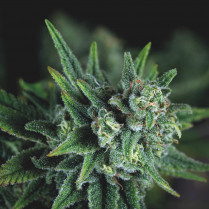
Flowering period: 48 days indoors (45 days under LED)
Buy Galaxy Fast
Flowering period: 58 days indoors (53 days under LED)
Buy Kryptonite Fast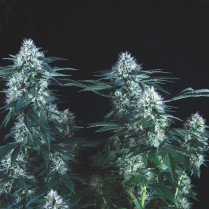
Flowering period: 53 days indoors (48 days under LED)
Buy Tutankhamon Fast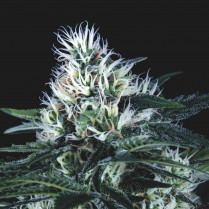
Flowering period: 50–55 days indoors (45 days under LED)
Buy Wembley Fast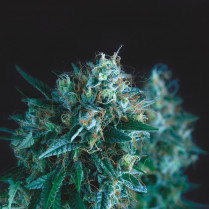
Flowering period: 51 days indoors (43 days under LED)
Buy Gorila Fast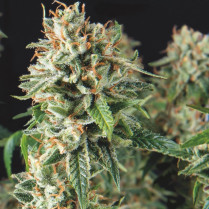
Flowering period: 51 days indoors (43 days under LED)
Buy Super OG Kush FastWant to try several at once? The Power Mix Fast pack brings four fast-flowering strains together — Gorila Fast, Galaxy Fast, Tutankhamon Fast and Kryptonite Fast — as 12 feminized seeds, three of each.
Browse the complete fast-flowering range — all six strains, feminized, photoperiod, shorter finish.
Frequently asked questions
Are fast version seeds autoflowering?
No. Fast version seeds are feminized photoperiod plants — they require a change in light schedule to begin flowering, exactly like standard feminized seeds. They do not flower automatically based on age. The "fast" refers to a shorter flowering window, not to automatic flowering. Autoflowering seeds and fast version seeds use two entirely different mechanisms to reach harvest.
How fast do fast-version strains flower?
Most fast version strains complete their flowering stage in 6–8 weeks — typically 2–3 weeks sooner than the standard feminized version of the same genetics. The total seed-to-harvest time is longer than an autoflower (which finishes in around 10–13 weeks from seed) but shorter than a standard feminized photoperiod strain, which usually takes 13–20 weeks from seed depending on how long the vegetative stage runs.
Are fast seeds feminized?
Yes. All fast version seeds in the Pyramid Seeds range are feminized — they are bred to produce female plants only, with the same reliability as standard feminized seeds (99%+). Fast version seeds combine two traits: feminized (female plants only) and fast-flowering (shorter flowering window). They are not regular seeds and will not produce male plants under normal growing conditions.
What is the difference between fast version and standard feminized seeds?
Both are feminized photoperiod plants and both need the switch to 12/12. The fast version simply finishes flowering roughly two to three weeks sooner, because a ruderalis-influenced parent was crossed in and then bred back out to remove the autoflowering trait while keeping the shorter finish.
Do fast version seeds yield less than standard feminized?
Not necessarily. A shorter flowering window gives the plant less time to bulk up, so yields per plant are often slightly lower than the standard version of the same genetics — but the difference is small, and over a year the extra harvest cycle usually more than makes up for it.
Read also


Strains from this article



Comments
No comments yet. Be the first.